

How to treat arc eyes

The common “arc eyes” is related to photokeratitis or ultraviolet keratitis which is a painful eye condition caused by exposure of insufficiently protected eyes to ultraviolet (UV) rays. Exposure may result from either natural (for example, intense sunlight) or artificial (for example, electric arc welding, photographer’s flood lamps, sun lamp in tanning salon, halogen desk lamp) sources. An arc eye is not usually noticed until 3 to 12 hours after exposure. Symptoms include increased tearing and a feeling of pain, likened to having sand in the eyes. If the eye is not treated, an infection could occur.
Subconjunctival Haemorrhage
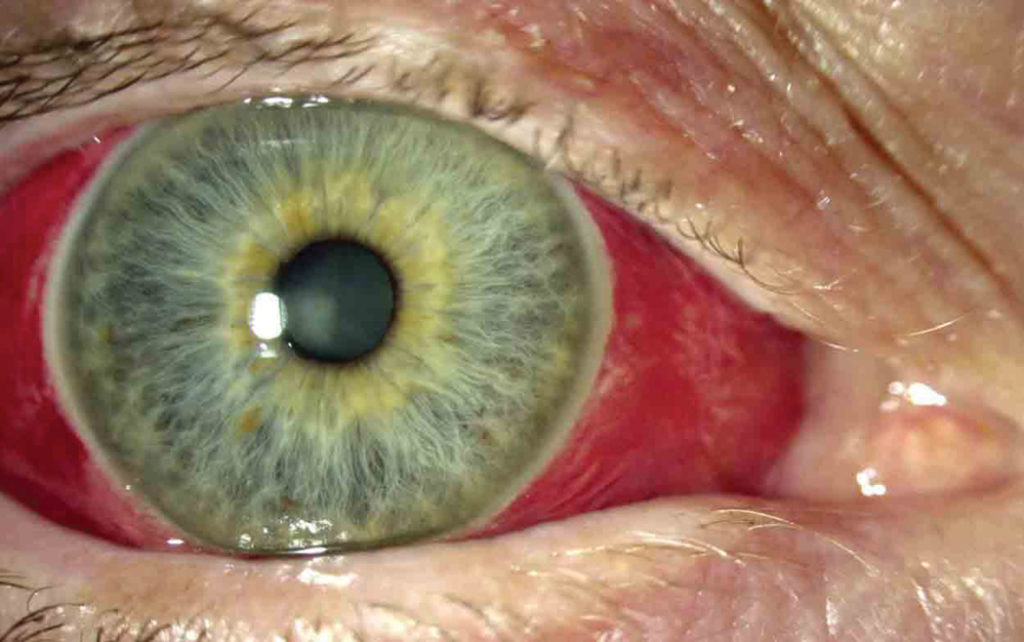
As much as eye diseases that manifest inside the eye can be asymptomatic, but sight threatenening, on the outside of the eye, pain is usually a good indicator of the seriousness of an inflammatory process. As a general rule, two red eyes are potentially less serious than one red eye. However, one red eye that is also painful, requires proper diagnosis and treatment, sooner rather than later.
Doctor, I see floaters & flashes; should I be concerned?

What are floaters? Floaters are tiny black-shaped specks that seem to drift or move in your field of vision. You may see them more clearly when looking at a plain background, such as a blank wall or a blue sky. Floaters are actually tiny clumps of gel or cells inside the vitreous, the clear jelly-like […]
Heterochromia

The iris is basically the area around our pupils that gives colour to our eyes. It is the amount of melanin that determines what colour our eyes will be. Blue eyes have less melanin than brown eyes. Heterochromia means different coloured eyes, as in one blue and one brown eye. Hetero means different and chromia means colour. Heterochromia, is not an eye disease and it does not affect our vision or pose any thread to ocular health.
Glaucoma “The thief in the night”

It is called the “thief in the night” because it will come and steal your vision without you being aware of it. From the lay-person’s point of view, the most important thing to know is, that Chronic Open Angle Glaucoma is asymptomatic. There is no sign or symptom until it is too late. The next important thing to know is; once damage has been caused, it cannot be reversed. But here is the good news; although Glaucoma cannot be cured, it can be treated successfully to prevent blindness, provided it is diagnosed early enough. This speaks to the importance of regular eye examinations, particularly in the over-forty age group, when the disease is most likely to strike.
The danger of looking at a solar eclipse

A solar eclipse occurs when the moon passes between earth and the sun, thereby totally or partly obscuring the image of the sun for a viewer on earth. A total solar eclipse occurs when the moon’s apparent diameter is larger than the sun’s, blocking all direct sunlight, turning day into darkness.
The dangers of Blue Light. What is it and how can we protect against its threat?

A growing body of medical research is beginning to focus on the role played by harmful blue light in damaging the eye, leading to conditions like age-related macular degeneration (AMD).
What optometrists see in the back of your eye

The value of an eye examination goes way beyond performing a refraction and producing a spectacle prescription. Optometrists are in the front line of primary eye care and often the first to detect ocular pathology and systemic diseases.
How to get rid of a stye

Styes do not pose a serious threat to ocular health and will usually heal spontaneously within a week or so. However, they can cause discomfort and be unsightly. Here are some things you can do to reduce discomfort, swelling and get rid of the stye quicker.
Black eye

The first thought that springs to mind when we see a black eye, is that some physical altercation was involved. True, but there are many causes of black eye from accidents to surgery. Whatever the cause, the result is there for all to see, which elicits all sorts of speculation from colleagues and friends, and the sooner it can disappear the better.